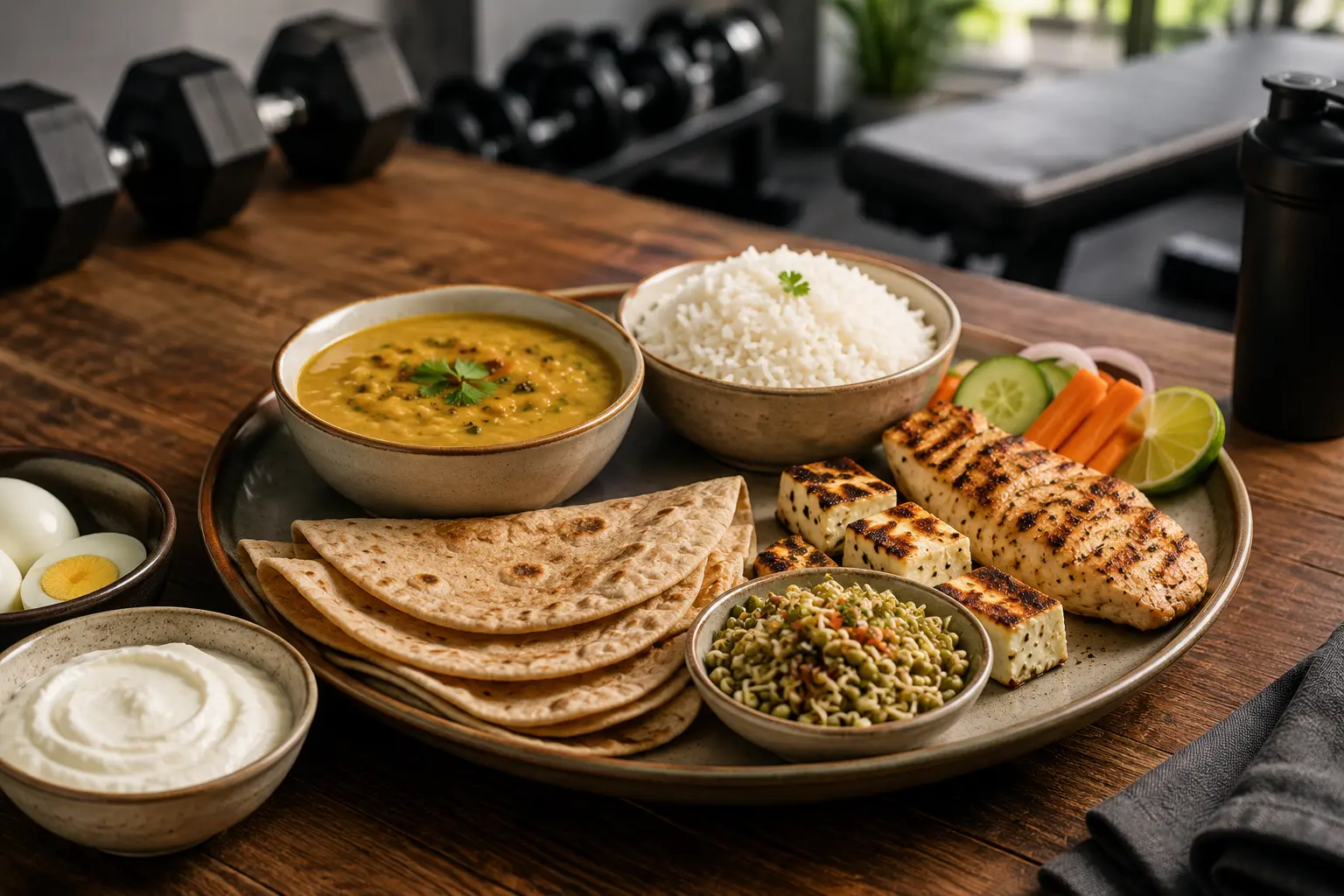
You Don’t Need Chicken Breast and Broccoli to Build Muscle
One of the most common myths in Indian gyms is that building muscle requires chicken breast, broccoli, and imported protein powders. In reality, some of the most protein-dense foods in the world are sitting in a standard Indian kitchen — dal, paneer, curd, eggs, and rajma among them. The real issue for most people isn’t access to protein; it’s not eating enough of it, consistently.
Muscle gain requires three things: a calorie surplus, adequate protein spread through the day, and progressive resistance training. Get those three right with everyday Indian food, and the muscle-building formula works exactly the same as it does anywhere else in the world.
How Much Protein Do You Actually Need?
For muscle gain, most people training regularly need roughly 1.6 to 2.2 grams of protein per kilogram of bodyweight per day. A 70kg person aiming for muscle gain, for example, would target somewhere between 110 and 155 grams of protein daily — spread across 4 to 5 meals rather than crammed into one.
The ‘spread it out’ part matters as much as the total. Your body can only use so much protein for muscle repair in a single sitting, so a big protein-loaded dinner after three low-protein meals is far less effective than moderate protein at every meal.
Vegetarian Protein Powerhouses in Indian Cooking
Dal is the backbone of vegetarian muscle building in India — a cup of cooked moong or toor dal provides around 7-9 grams of protein, and combining two different dals (like dal makhani with rajma) improves the amino acid profile even further. Paneer is another workhorse: 100 grams delivers roughly 18 grams of protein, making paneer bhurji or grilled paneer cubes an easy addition to any meal.
Curd and Greek-style hung curd add both protein and gut-friendly probiotics — a bowl of hung curd with a spoon of peanut butter makes a genuinely great snack. Soya chunks, chickpeas (chana), sprouts, and peanuts round out a vegetarian protein rotation that never gets boring if you vary your masalas and preparation styles.
Non-Vegetarian Options That Fit Naturally Into Indian Meals
Eggs remain one of the most cost-effective protein sources available — a full egg with a couple of egg whites gives you a complete amino acid profile for a fraction of the cost of imported protein bars. Chicken, particularly cooked in a light curry or grilled with minimal oil, is another staple: 100 grams of chicken breast provides around 27 grams of protein.
Fish like rohu, katla, or pomfret, cooked in traditional South Indian styles with less oil, also work well as a rotating protein source through the week, adding variety without sacrificing your macros.
A Sample High-Protein Indian Day for Muscle Gain
Breakfast: 2 whole eggs plus 2 egg whites with a vegetable stuffed paratha. Mid-morning: A bowl of curd with roasted chana. Lunch: 3 rotis, a generous portion of dal or rajma, paneer sabzi, and salad. Pre-workout: A banana with peanut butter. Post-workout: A whey protein shake or a large bowl of soya chunk curry with rice. Dinner: Grilled chicken or a double portion of paneer with sautéed vegetables and one roti.
This kind of day easily clears 130-150 grams of protein without a single ‘diet food’ on the plate — it’s just an Indian meal plan, structured with intention.
Where Protein Meets Progressive Training
Protein alone won’t build muscle — it needs to be paired with structured, progressively overloaded strength training to actually be put to use. Eating right and lifting randomly gets you halfway there at best.
At Witness the Fitness in Begur , our trainers build personalized strength programs alongside practical, Indian-food-based nutrition guidance — no imported diet plans, no unrealistic grocery lists. If you’re serious about building muscle and want a plan that fits your kitchen and your schedule, visit WTF in Begur, near Electronic City, for a free fitness assessment.